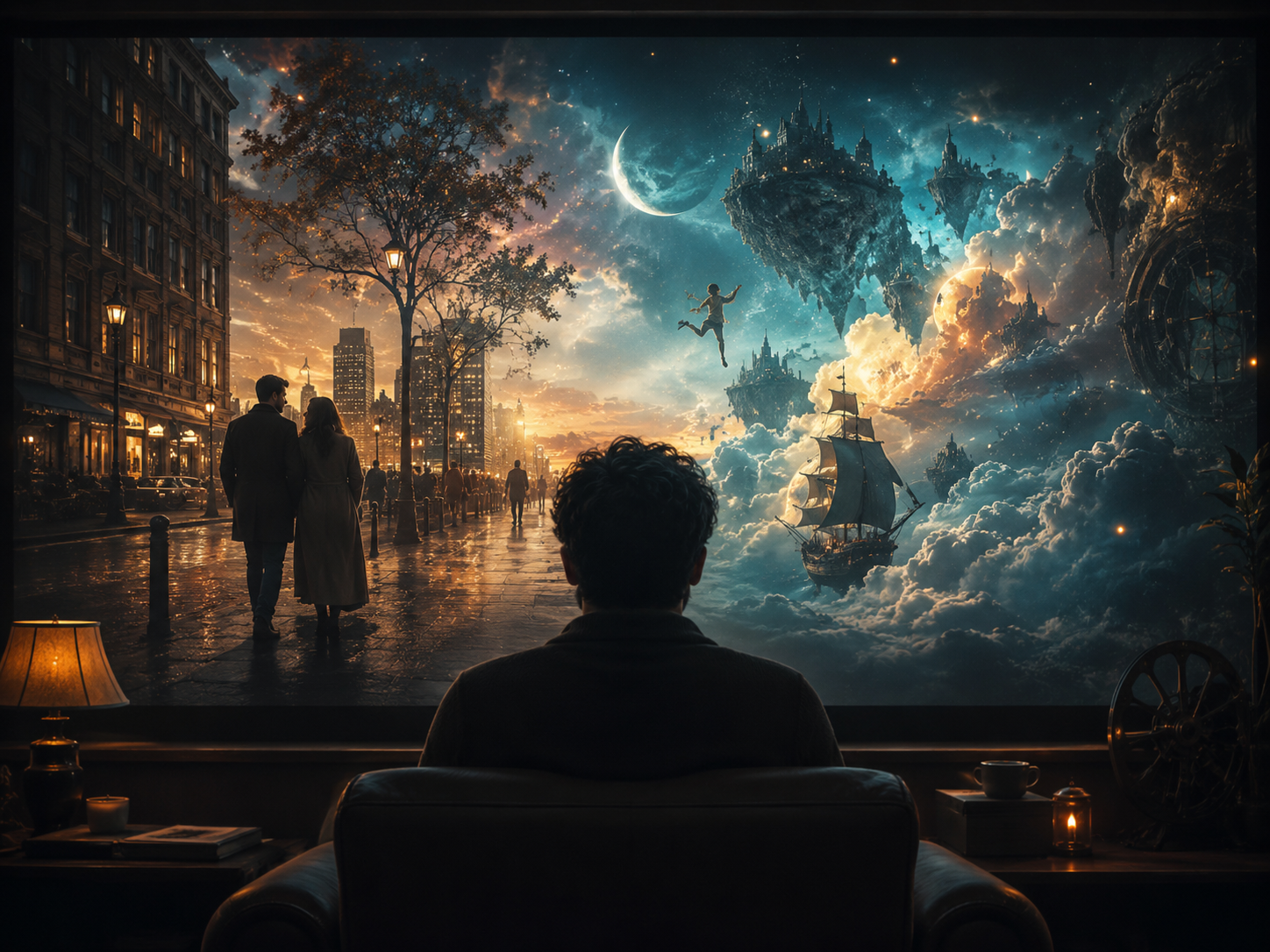
 Today, I want to share a comment that some of my friends make fun of me for, because I say it after almost every movie: what makes a movie or a TV show good?
First of all, it is important to say that all of this is just my personal opinion, so let’s not turn it into an argument. Art is subjective, and everyone watches a movie with different expectations. Some people care more about acting, some care about cinematography, some care about the story, and some just want to have a good time. But from my perspective, the thing that makes a movie or TV show truly memorable is something a little different.
If you ask me this question, my answer would not simply be production quality, runtime, casting choices, visual effects, or how famous the actors are. Of course, all of these things matter. A good cast, strong visuals, and high production quality can make a project more enjoyable. But I do not think they are the main thing that makes a story stay in our minds.
In my opinion, what makes a production good is its ability to balance fantastical elements with the reality of real life in an incredibly accurate way, and then continue the story within that balance. A movie can have time travel, superheroes, impossible detectives, magical worlds, or unbelievable coincidences. But if those elements are connected to real human feelings, real problems, and emotions we can understand, then the story becomes much stronger.
Let me explain with examples, and it will make more sense.
There is a movie called About Time. It tells the story of a young man who has the ability to travel back in time, a power passed down from father to son, and he uses this ability for love. When you think about it, the fantastical element is time travel. In real life, none of us can go back and fix a mistake, repeat a moment, or change the way a conversation went. But the realistic side of the story is love, family, regret, growing up, and learning to appreciate ordinary moments. These are things that almost everyone can relate to.
That is where the balance becomes important. If the director had focused too much on time travel, the movie could have easily turned into a complicated science fiction story. We would start asking questions about logic, timelines, paradoxes, and rules. In that case, the emotional side of the movie might lose its power. The love story would not feel as meaningful, because the fantasy element would dominate everything.
But the opposite would also be a problem. If the movie ignored the fantastical side and focused only on romance, then it might become just another classic romantic drama. The time travel would feel unnecessary, like a random trick added to make the film different. What makes About Time special is that it does not let either side completely take over. The fantasy gives the story charm, but the real emotions give it meaning.
Of course, love is not the only parameter for this idea. When we look at Sherlock Holmes, we see a similar situation. Realistically, there probably should not be a person who can notice every tiny detail, read people’s lives from their clothes, predict behavior from small movements, and solve extremely complicated cases almost instantly. This is not exactly normal human ability. But because Sherlock is placed inside a world that still feels realistic, his extraordinary mind becomes exciting instead of ridiculous.
The streets, the crimes, the people, the conversations, and the social environment around him feel close enough to real life. So when Sherlock does something almost impossible, we accept it. We enjoy it. His intelligence feels like a fantasy element, but it is still connected to real human behavior, real crime, and real psychology. That is why it works.
I think this is also why many superhero movies succeed or fail. A superhero flying through the sky or saving the world is obviously unrealistic. But if the character has real fears, real losses, real responsibilities, and real emotional conflicts, then we care. The power itself is not enough. The audience needs to see something human behind the power. Otherwise, we are only watching visual effects.
For me, the best stories are the ones that make us think, “This could never happen, but I understand exactly how that character feels.” That sentence is the perfect balance. The event may be impossible, but the emotion must be real. A movie can take us to another planet, another timeline, or a completely imaginary world, but it still has to remind us of something from our own lives.
That is why I always come back to this idea after watching movies or TV shows. A good production does not have to be fully realistic. In fact, being too realistic can sometimes make a story boring. But being too fantastical without emotional truth can also make it empty. The magic happens in the middle, when impossible things are used to tell very real human stories.
So, from my perspective, what makes a movie or TV show good is not just how expensive it looks, how famous the actors are, or how original the concept is. It is the balance between imagination and reality. It is the ability to make the unreal feel emotionally true. That is the kind of story that stays with me after the screen goes dark.
I.S.A